


Do Building Regulations Apply to Conservatory Roof Replacement?
One of the most common questions we receive is whether replacing a conservatory roof requires a building regulations certificate. The answer depends on the specifics of your project. Generally, if your conservatory meets certain criteria, such as being separated from the main house by external doors and windows, and if its floor area is less than 30 square metres, it is considered an exempt structure. In such cases, replacing the roof with a tiled system usually does not require building regulations approval.
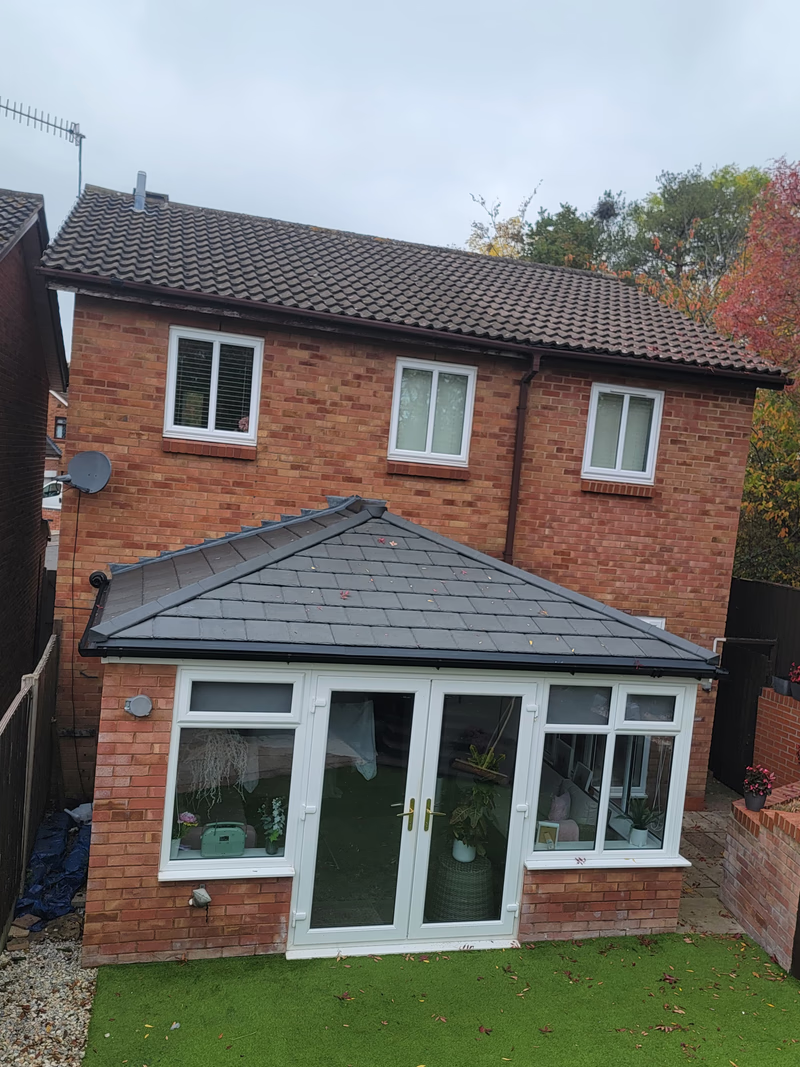
However, if you are making substantial changes that affect the conservatory's structure or thermal performance, you may need to consult building regulations. For instance, if you replace a lightweight polycarbonate roof with a heavier tiled roof, the conservatory frame and foundations must be assessed to ensure they can safely support the additional weight. This is where our site surveys become crucial; we check the existing frame and base thoroughly to confirm suitability before installation. Ensuring compliance at this stage prevents potential issues later.
- Exemptions apply to conservatories separated by external doors.
- Structural changes may require building regulations approval.
What Factors Determine Compliance?
Several factors influence whether building regulations apply to your conservatory roof replacement. The first is whether your conservatory remains a 'non-habitable' space. If it is separated from your main home by doors and windows, and has independent heating, it’s likely exempt. However, if you plan to remove these barriers or integrate the conservatory into your main living space, it may be reclassified as an extension, triggering building regulations requirements.
Another key factor is structural integrity. Tiled conservatory roofs, while offering excellent insulation and aesthetic benefits, are heavier than glass or polycarbonate options. During our surveys, we assess the conservatory's frame, foundations, and roof pitch to ensure they can support the new roof safely. If adjustments are needed, we will advise you accordingly. Compliance with building regulations ensures your conservatory remains safe and structurally sound for years to come.
- Open-plan designs may require building regulations approval.
- Weight and structural integrity are critical for compliance.
How to Ensure Your Conservatory Roof Replacement Meets Regulations
Ensuring compliance with building regulations starts with a professional assessment of your conservatory. At Conservatory Roof Services, we conduct detailed surveys to evaluate the existing structure, including the roof pitch, drainage, and ventilation systems. These checks are vital when replacing a lightweight roof with a heavier tiled system, as inadequate support could lead to structural issues. If your project requires building regulations approval, we will guide you through the process.
For homeowners integrating their conservatory into their main living space, additional measures may be needed to meet thermal efficiency standards. Tiled roofs offer excellent insulation properties, helping your conservatory retain heat and reduce energy costs. However, proper ventilation must be maintained to prevent condensation build-up. As part of our service, we ensure your roof replacement complies with all necessary standards while delivering a durable and energy-efficient solution.
- Professional surveys assess structural integrity and compliance.
- Ventilation and drainage are key considerations in roof replacement.
Common Misconceptions About Building Regulations and Conservatories
One common misconception is that all conservatory roof replacements require building regulations approval. As mentioned earlier, this is not always true. If your conservatory meets exemption criteria, you can replace its roof without seeking approval. However, this exemption does not apply if you are making structural alterations or integrating it as part of your main living area.
Another misunderstanding involves thermal efficiency. Some believe that installing a tiled roof automatically makes their conservatory compliant with energy regulations. While tiled roofs do improve insulation, compliance depends on other factors, such as maintaining proper ventilation and ensuring the structure can handle the new roof’s weight. Our team ensures all these points are considered during the planning and installation stages.
- Not all conservatory roof replacements require approval.
- Thermal efficiency depends on more than just the roof material.
Also see: Do I Need to Upgrade My Conservatory Roof to Meet Modern…

